As a leader, owner, and/or founder, it’s important to understand the four types of performers, based on potential, and address their unique needs accordingly.
High Performer – High Potential
These are the team members who are looking for growth and challenge. You want to give these people stretch and growth opportunities, as well as development and coaching. They’re also looking for trust, autonomy, and career progression through promotions, recognition, and compensation.
If you aren’t able to address their needs, they will move on and/or disengage.
If you aren’t able to provide monetary or formal career progression, ensure you speak with them to understand what would be meaningful for them. They may be excited for a new challenge that’s accompanied by an opportunity to be more visible.
High Performer – Low Potential
These are a misunderstood and, typically, under appreciated group of employees. Provided they are content, these team members are your stable and steady employees – they do a good job and are perfectly happy to be in the role they’re in.
In small businesses or low-growth phases of a start-up, these are amazing people to have on your team as they’ll continue to do good work without being at risk of leaving in order to find that next opportunity.
Don’t take advantage of these people!
Instead, check in with them and/or conduct a Stay Interview to understand what they enjoy, what they don’t enjoy, and to understand their goals. Further, you’ll want to ensure you follow up at a future date and ensure nothing has changed.
Similar to the High Performer – High Potential employee, you’ll still want to provide them with autonomy, feedback on their work and performance, praise and recognition, and meaningful work that aligns with their strengths and goals.
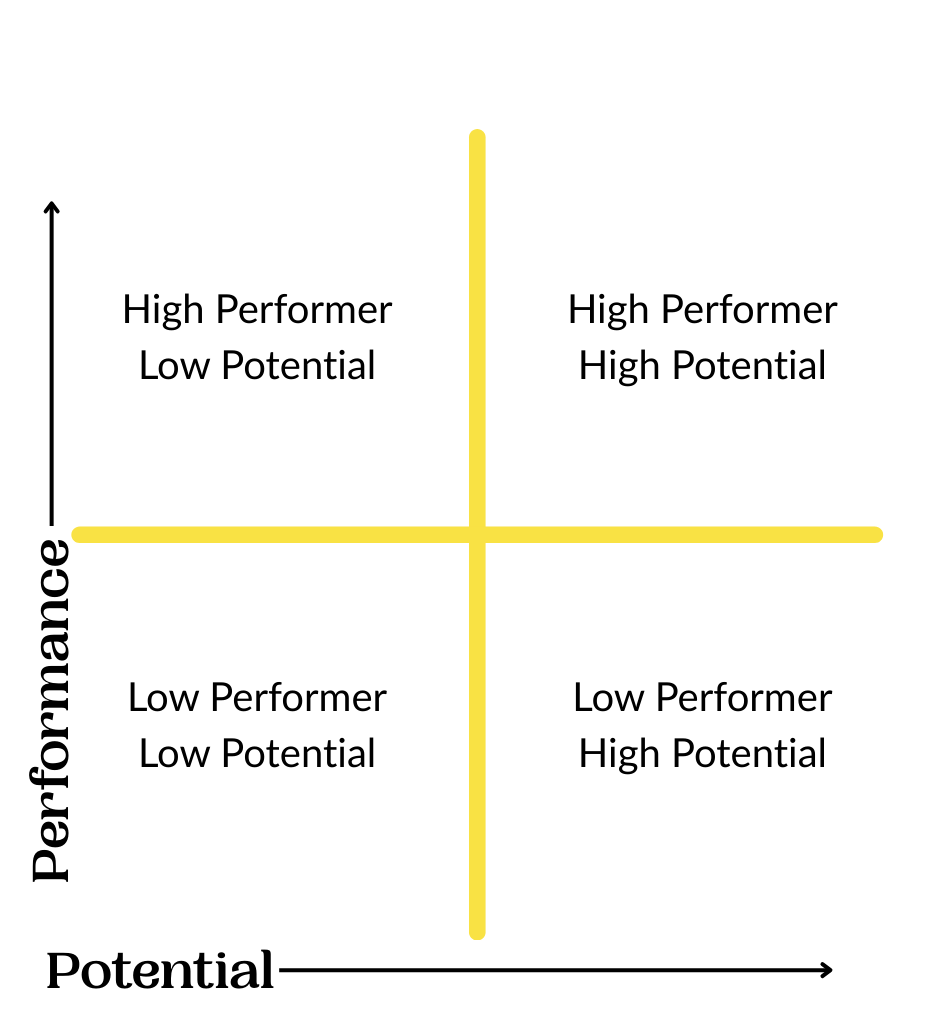
Low Performer – High Potential
Unfortunately, these are your disengaged employees. They may have started off in one of the previous groups, but for whatever reason, they’ve disengaged.
If caught early, it’s possible to re-engage them through understanding the disconnection, their goals, any changes in their personal life, and needs (from the company, their leader, their work).
You can try conducting a Stay Interview with them to help you better understand what they enjoy and what they don’t enjoy, and if something has changed that’s lead to the drop in performance.
You may need to manage their performance in a more formal way. This could include through progressive discipline or a formal Performance Improvement Plan.
Low Performer – Low Potential
This is likely a bad hire; however, these employees could have slipped through the cracks over the course of their employment.
You’ll likely need to try to retrain and re-engage; however, it is likely a path to termination is in your future. This could be through performance management via progressive discipline or formal Performance Improvement Plan.
You can find all these resources in the People Playbook (coming soon)! To be the first to know, sign up for the People Playbook Waitlist here.
 People Partnerships
Leave a comment